





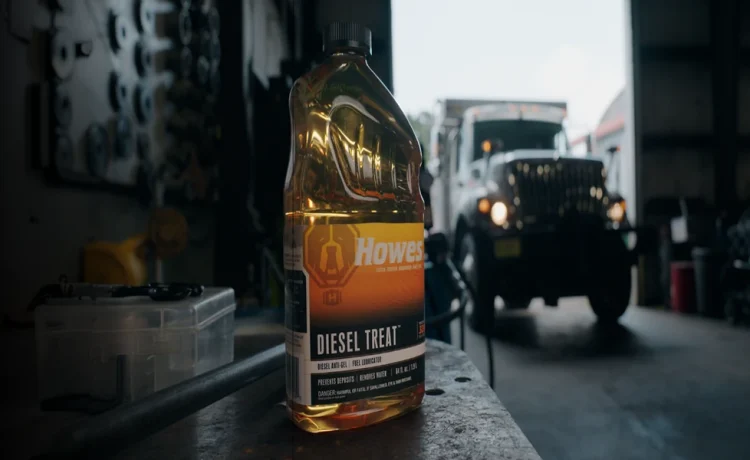
If you drive a diesel pickup, you have seen the shelf of bottles at the parts store. Each one promises cleaner fuel, a smoother engine, and fewer problems. When your truck already starts and runs well, it is fair to ask whether any of it matters.
I wrote this to give you a clear answer. I looked at what modern diesel fuel lacks, what your pickup’s fuel system needs, and what the makers of these products promise and guarantee. A good diesel treatment can protect your pump, injectors, and filters. The results depend on picking the right product and using it the right way.
Below, I cover the problems treatment solves, the cases where you can skip it, and the company I recommend if you decide to use one.
What Your Fuel Leaves Out
Pump diesel in the United States is Ultra Low Sulfur Diesel. It burns cleaner, but removing the sulfur also removed much of the natural lubrication the fuel once had.
Your fuel is the only thing that lubricates the pump and injectors in your truck. Less lubrication means more wear over time. Replacement parts on a modern diesel pickup cost a lot, which is why I treat fuel care as a budget topic as much as a maintenance one.
Four Problems a Treatment Can Address
Most quality treatments target the same four issues.
- Low lubricity. The fuel needs added lubrication for the pump, injectors, and upper cylinders.
- Water. Water enters your tank through condensation and bad fuel. It causes rust, filter trouble, and hard starts.
- Cold weather gelling. Diesel starts to cloud and thicken around 34°F. It can gel fully at about 15°F or lower.
- Injector deposits. Deposits change the spray pattern, which lowers power and fuel economy and adds smoke.
If you drive in a cold state, pull a trailer, or keep your truck for many years, each of these affects you.
Why I Recommend Howes
If you decide a treatment is worth it, I suggest you look at Howes Products. Here is why they stand out.
They are a fifth-generation, family-owned company in North Kingstown, Rhode Island. They have made lubricants and fuel additives for more than a century, starting in 1920. That history matters to me because fuel additives are easy to sell and hard to prove.
Their formulas are made with no alcohol or harmful solvents. This matters for water. Alcohol-based products mix water into the fuel. Howes Diesel Treat demulsifies water, which pushes it out of the fuel so your water separator can remove it.
They also back their claims with guarantees:
- A free winter tow guarantee on Diesel Treat. The promise is “You Go or We Pay the Tow.”
- A 100 percent satisfaction guarantee. If you are unhappy, you mail in your original receipt for a full refund.
- A guaranteed fuel economy gain of 5 percent or more with regular use of Diesel Defender.
Their products are petroleum-based, safe for diesel particulate filters, and safe for all diesel emission systems. They will not void your warranty when you use them as directed.
Match the Product to Your Truck
Howes makes more than one diesel product. Each one has a job, and you do not need all of them.
Diesel Treat for Everyday Protection
This is their anti-gel and fuel conditioner. It adds lubrication, removes water, and helps prevent injector deposits. It also reduces cold filter plugging and works in diesel and biodiesel blends. The label calls for a double dose in pickups, so read the ratio chart before you pour. It comes in 15 oz, 32 oz, and 64 oz bottles.
Diesel Defender for Cleaning and Lubricity
Defender uses a detergent called IDX4. Howes says it gives up to 2.5 times more lubricity than most competing products. They also say independent wear scar testing showed treated fuel beat both the US and the stricter European standards. It is built to clean the full fuel system within three treatments, including the internal deposits common in high pressure common rail engines. You can use it all year, and you can use it with Diesel Treat.
Meaner Power Kleaner for a Deep Clean
This is a one-tank flush, not a daily product. Howes recommends it when you buy a used truck with an unknown history, when you have skipped treatment, or when power starts to slip. It cleans baked-on injector deposits and reduces soot loading in the particulate filter. The 64 oz bottle treats up to 320 gallons.
Diesel Lifeline for Emergencies
Lifeline re-liquefies gelled fuel and de-ices frozen filters, often in about 15 minutes. Diesel Treat prevents gelling but cannot reverse it once it starts. Lifeline recovers a truck after the fact. Howes suggests you keep a bottle in your cab or toolbox during cold months.
When You Can Skip It
I want you to have the full picture. Treatment gives less value in a few cases.
- Your truck is new, you drive it in a warm place, and you use top tier fuel from a busy station.
- You sell the truck in a short time and have no plans for long-term care.
- Your problem is mechanical, such as a failed sensor or a bad pump. An additive will not fix broken parts.
Howes says the same about Meaner Power Kleaner. It is not a fix for every check engine light. It addresses deposit and soot conditions only.
A Simple Plan to Follow
1. Read your owner’s manual and confirm that additives fit your warranty. Howes says their products are warranty safe.
2. Add Diesel Treat at every fill-up in cold months, and start before the first freeze.
3. Add Diesel Defender through the year to keep injectors clean and the pump lubricated.
4. Use Meaner Power Kleaner once if you bought the truck used or if performance has dropped.
5. Keep Diesel Lifeline in your truck for a sudden cold snap.
6. Follow the dose on the label every time.
My Answer
For most diesel pickup owners, a treatment is worth the small cost. Replacing an injector or pump costs far more than a bottle of additive, and a gelled tank in January costs you time and money as well.
Pick a product from a company that backs it with real guarantees, and use it as the label directs. Howes meets that standard, and their line gives you a clear product for each need your truck will have.


Ceramic Coating: What Makes a Quality Installation?

A glossy, well-maintained vehicle does more than look good. It also reflects how well you protect its exterior from everyday...

5 Signs Your Vehicle’s Shocks or Struts Need to Be Replaced

Suspension wear can develop gradually. A vehicle may still handle everyday trips while its ride becomes less controlled, making it...

Why Does Your Steering Wheel Feel Notchy or Uneven When Turning?

A steering wheel must move easily, and with natural reaction to the motions of the driver. You may feel some...

How Full Operational Lease Reduces Vehicle Management Responsibilities


Managing a vehicle requires regular checks, service arrangements, payment records, and careful planning. These duties can take valuable time away...