





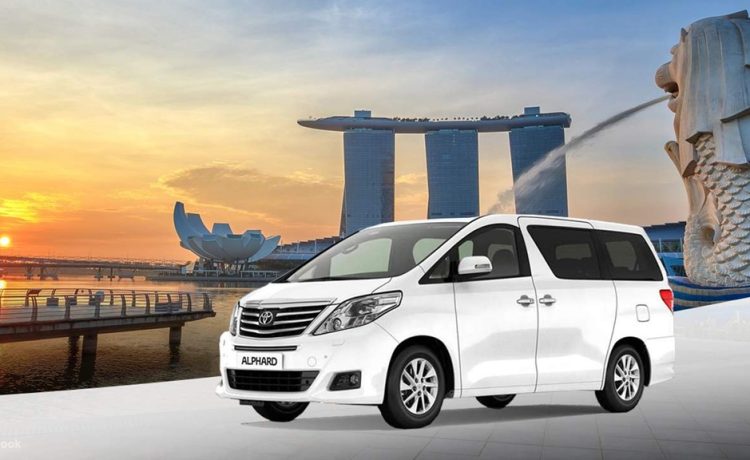
Singapore Car Rental is, at its essence, a prescription for freedom, a remedy for the peculiar malaise that afflicts the modern traveller bound to schedules not of their making. As a physician, I have learned that healing often begins not with medication but with restoring agency to the patient, allowing them to participate in their own recovery, to choose their path forward. The act of renting a vehicle in Singapore, this meticulously ordered city-state, represents a similar gesture towards self-determination, a declaration that one’s journey will be authored by oneself rather than dictated by the rhythms of public systems, however efficient they may be.
The Diagnosis of Modern Mobility
Every city presents its inhabitants and visitors with a fundamental question: how shall we move through this space? Singapore, with its 5.9 million souls compressed into 734 square kilometres, has constructed one of the world’s most sophisticated public transport networks. Yet the question persists. The answer, for many, lies in Singapore car rental, a choice that reveals something profound about human nature and our relationship with control.
Consider the family visiting from abroad, three children between four and twelve years old, suitcases containing the necessities of travel, snacks for unpredictable hunger, medications for minor ailments. The calculus of public transport becomes, in such circumstances, not merely inconvenient but genuinely distressing. The rental vehicle transforms from luxury to necessity, from choice to imperative.
The requirements for accessing this freedom follow a predictable pattern:
- A valid driving licence from one’s country of residence
- International Driving Permit for certain nationalities, the bureaucratic bridge between jurisdictions
- Minimum age requirements, typically 21 to 23 years depending on vehicle category
- Credit facilities adequate for security deposits
- Comprehension of Singapore’s traffic regulations, which are both comprehensive and strictly enforced
The Land Transport Authority articulates the covenant plainly: “All drivers must comply with road traffic rules and Electronic Road Pricing system charges during operational hours.” This is the contract between individual liberty and collective order, between personal mobility and social responsibility.
The Pathology of Constraint
I have observed in my medical practice how constraint, when excessive, breeds its own pathology. Patients denied agency in their treatment often fare worse than those given choices, even when the medical outcomes should theoretically be identical. The psychological dimension of autonomy cannot be separated from physical wellbeing.
Singapore car rental addresses a similar constraint. The island, despite its compact dimensions, contains multitudes. The northern territories where nature reserves shelter migrating birds and remnant forests. The eastern coastline where families gather on weekends, temporary refuge from the vertical living that defines so much of Singaporean domestic life. The western industrial zones where the economic miracle continues its daily unfolding. These places exist on maps and in promotional materials, yet accessing them according to one’s own biological clock, one’s own family’s needs, requires independent transport.
The cost of such freedom varies. Daily rates span a spectrum from economical to premium. Insurance provisions, whilst increasing immediate expense, function as prophylaxis against catastrophic financial risk. Fuel costs reflect Singapore’s complete dependence on imported petroleum, a vulnerability the nation has never denied. The Electronic Road Pricing system represents a form of behavioural medicine, using economic incentives to modify traffic patterns and reduce congestion.
The Therapeutics of Choice
There exists, in Singapore Car Rental, something therapeutically valuable beyond mere transportation. I think of the elderly couple I once encountered at a rental counter, both in their seventies, methodically reviewing the vehicle inspection checklist. They were visiting their daughter, who worked long hours at a hospital. Rather than burden her with constant ferrying between appointments and attractions, they had chosen independence. The dignity in that choice was palpable.
Or consider the young researcher on sabbatical, studying tropical ecology, needing access to field sites scattered across the island at unpredictable hours when inspiration or weather conditions aligned. Public transport schedules serve the majority excellently but cannot accommodate every individual variation in human endeavour.
Singapore car rental creates space for these variations, these deviations from the median that often produce the most interesting outcomes in both medicine and life.
The Prognosis and Treatment Plan
Singapore’s traffic enforcement operates with the precision of a well-designed clinical trial: systematic, transparent, and rigorously applied. Speed limits are absolute. Safety compliance is mandatory. The consequences of violation are swift and non-discriminatory. This regulatory framework, whilst stringent, generates enviable safety outcomes and traffic flow efficiency.
The rules protect everyone. They create the conditions under which individual freedom can be exercised without descending into chaos. This is the paradox at the heart of Singapore’s success: freedom through order, autonomy within structure.
The Cure for Restlessness
Having travelled extensively for conferences and research, I have come to appreciate that how we move through a place shapes what we understand about it. The view from a taxi window differs from the view through one’s own windscreen. Agency transforms observation into experience, passive tourism into active exploration.
Singapore car rental offers that transformation. It permits the spontaneous detour, the unplanned stop, the extra hour spent at a location that unexpectedly captures one’s imagination. These deviations from itinerary often contain the most memorable moments, the experiences that endure after flights are forgotten and hotel rooms blur together.
The prescription, then, is straightforward: for those seeking not merely to visit Singapore but to engage with it on their own terms, to write their own story across its immaculate roads and diverse landscapes, vehicle rental provides both the means and the permission. The treatment is available to all who meet the requirements and accept the responsibilities. For those ready to claim this particular form of autonomy, to experience the therapeutic value of self-directed exploration in one of the world’s most fascinating urban experiments, information awaits on the website.


How Full Operational Lease Reduces Vehicle Management Responsibilities

Managing a vehicle requires regular checks, service arrangements, payment records, and careful planning. These duties can take valuable time away...

Why the First Estimate Is Rarely the Last Word

The estimate looked reasonable. The insurer approved it, the car went into the shop, and three days later the phone...

Choosing Used Trucks According To Available Financing Options For Buyers


A suitable purchase begins with a view of monthly spending. Used trucks can fit different budgets when financing terms match...

What Does a Clunking Sound from the Front Suspension Really Mean?
A clunking sound from the front suspension can indicate several developing mechanical problems. The sound often appears when the vehicle...